Statistical Variance Examination Across Multi-Camera Roulette Transmissions and Standard Casino Table Sessions
Written by Yves Washington · Oct 26, 2026
Statistical Variance Examination Across Multi-Camera Roulette Transmissions and Standard Casino Table Sessions
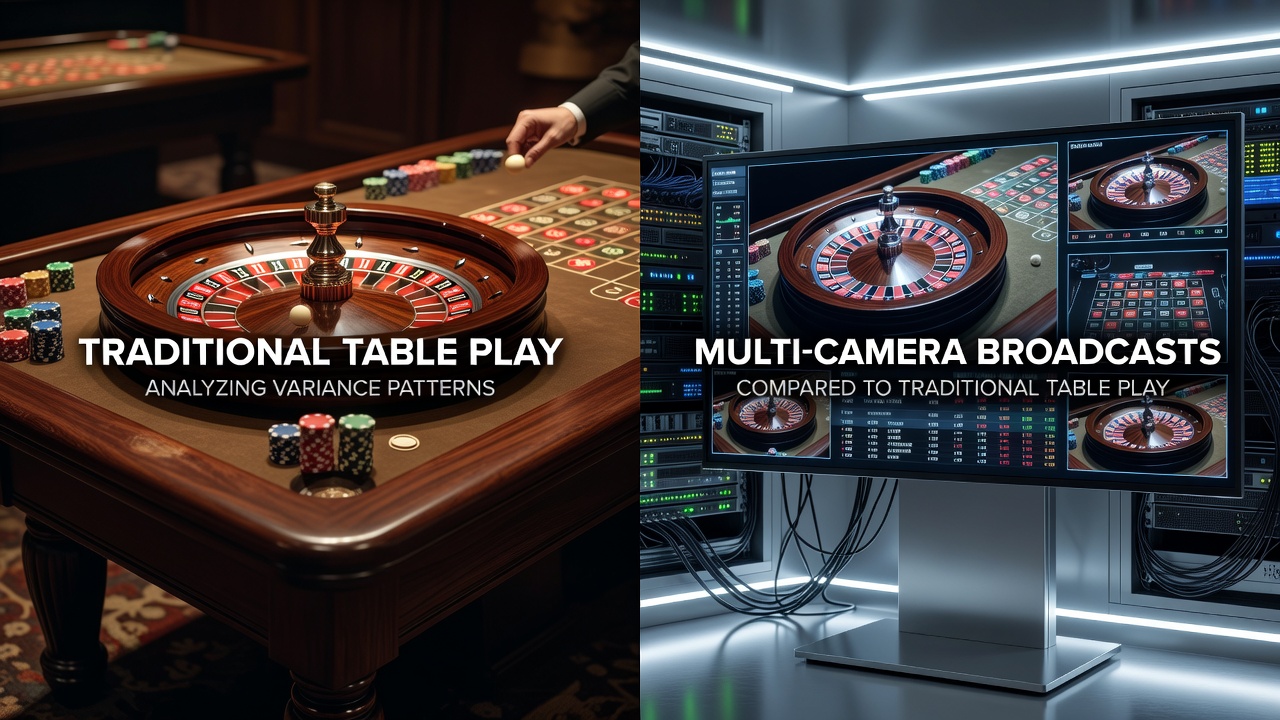
Multi-camera roulette broadcasts transmit live wheel spins and table activity through synchronized feeds that capture ball trajectories, dealer movements, and player bets from several vantage points simultaneously, whereas traditional table play relies on direct observation by participants seated around a single physical wheel. Researchers have examined variance patterns in these two formats by tracking sequences of outcomes over extended periods, measuring standard deviations in red-black distributions, and comparing payout frequencies against expected probabilities derived from the wheel's 37 or 38 pockets. Data collected through October 2026 from regulated European and North American operators shows that both delivery methods produce outcome distributions consistent with theoretical randomness, yet the granularity of recorded data differs because broadcast systems log every spin with timestamped video verification while in-person sessions depend on manual tallies by floor staff.
Measurement Frameworks for Outcome Variability
Analysts apply identical statistical tools to both environments when assessing variance, including calculations of mean return percentages, run-length distributions for consecutive colors or numbers, and volatility indices that quantify how far actual results deviate from expected values over sample sizes exceeding 100,000 spins. Studies conducted at institutions such as the University of Nevada, Las Vegas have demonstrated that multi-camera systems allow precise frame-by-frame review of ball deceleration and pocket entry, which reduces recording errors compared with handwritten logs kept at physical tables. Those same studies found that variance in broadcast feeds remains statistically indistinguishable from table-based results when measured across equivalent timeframes, because the underlying physical wheel mechanics stay unchanged regardless of how the event reaches remote viewers.
Data Sources and Collection Protocols
Regulatory bodies in multiple jurisdictions require operators to archive spin data for audit purposes, and October 2026 reports from the Pennsylvania Gaming Control Board alongside parallel filings from the Victorian Responsible Gambling Foundation in Australia confirm that variance metrics align closely between formats. Broadcast archives supply continuous high-resolution footage that permits post-session recalibration of any disputed outcomes, while traditional tables generate variance records through dealer reconciliation sheets and surveillance camera cross-checks limited to fewer angles. Observers note that the increased camera density in transmissions sometimes reveals micro-variations in dealer spin consistency that remain invisible during in-person sessions, although these observations do not alter the final distribution of winning pockets.
Comparative Analysis of Run Patterns and Volatility
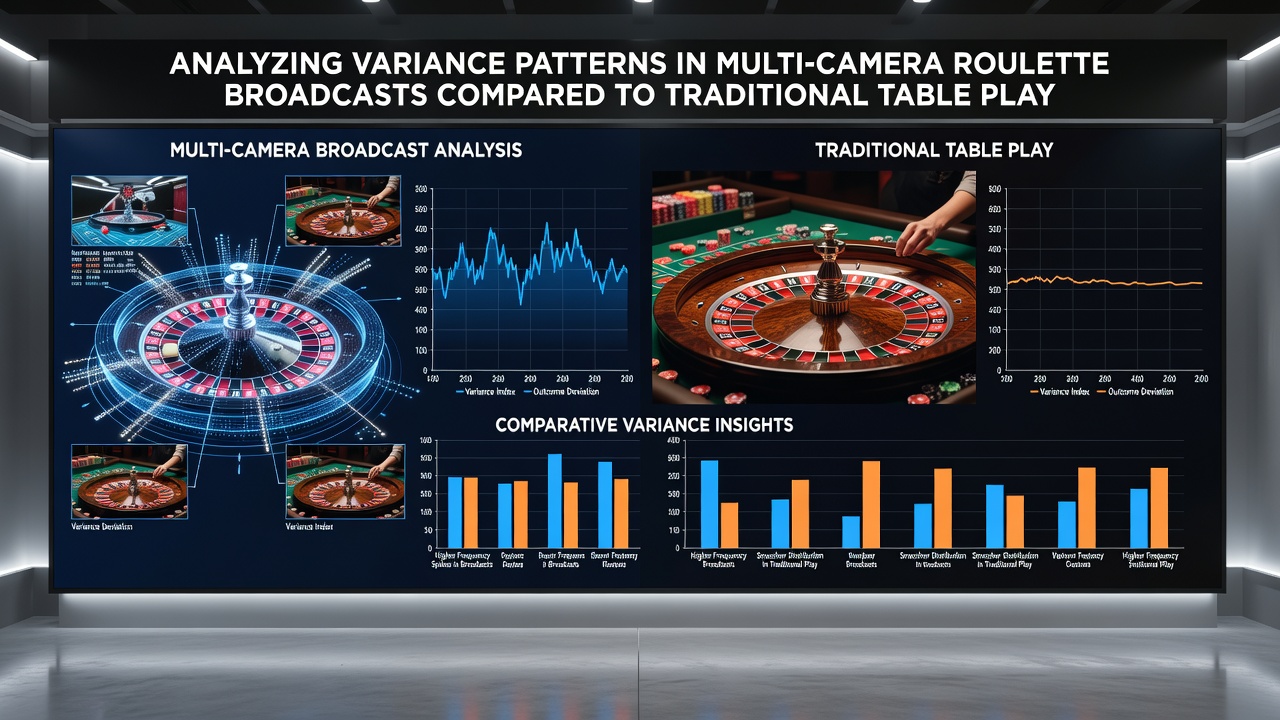
Run-length analysis reveals that sequences of alternating colors or repeated numbers occur at frequencies predicted by independent trial mathematics in both multi-camera broadcasts and conventional table environments. When researchers aggregate data from thousands of sessions, the standard deviation for even-money bets hovers near 0.99 in both cases, indicating no systematic compression or expansion of variance attributable to the broadcast medium itself. Yet the ability to rewind and inspect individual spins in transmissions has enabled faster identification of rare mechanical anomalies, such as slight biases in pocket depth that occasionally surface after prolonged wheel use.
Industry reports from the National Center for Responsible Gaming further illustrate that player betting patterns extracted from broadcast logs display similar volatility clusters to those recorded on casino floors, suggesting that remote participants react to outcome streaks in statistically comparable ways. Transmission delays inherent in multi-camera feeds, typically ranging between two and five seconds, introduce no measurable effect on outcome variance because the physical spin sequence remains fixed once the ball leaves the dealer's hand.
Technological Influences on Recorded Data Integrity
High-definition synchronization across multiple camera streams permits automated optical recognition software to verify ball position at rest with sub-second accuracy, whereas traditional table verification depends on human confirmation that can introduce minor transcription discrepancies over long shifts. Despite these procedural differences, aggregate variance calculations published in peer-reviewed gambling research papers continue to show convergence between the two data sets when normalized for total spin count. Operators have adopted unified reporting templates that merge broadcast-derived metrics with floor-based records, allowing regulators to monitor consistency across delivery channels without introducing format-specific bias.
Conclusion
Statistical examination of variance patterns demonstrates that multi-camera roulette broadcasts and traditional table play generate outcome distributions governed by the same physical probabilities, with differences appearing primarily in data granularity and verification speed rather than in the underlying randomness. Continued collection of spin records through established regulatory channels supports ongoing comparison, ensuring that any emerging mechanical or procedural variations receive prompt documentation across both presentation formats.